How-to
How to lose weight without counting calories
Use portion control, more protein and fiber, ready meals, slower eating and a scale instead of a food log.

By Romaine Rusnak, RD, LDN, Registered Dietitian at Clean Eatz. Published November 6, 2026.

Why counting calories isn't the only way
Calorie counting works for some people. For a lot of us, it doesn't stick. Here's how to lose weight without counting calories: use portion control instead of math, eat more protein and fiber, let pre-portioned meals do the counting, slow down with mindful eating and track progress without a food log.
Five habits. No app, no spreadsheet.
Let's be straight about one thing. Calories still count. You just don't have to count them. Harvard on healthy weight says cutting calories is still the most effective approach for weight control. It also says no single diet plan has reliably beaten the others over the long run.
So the real goal is to eat a little less without fighting yourself at every meal. One large trial shows you can lose weight without counting calories. In the DIETFITS trial, 609 adults with overweight or obesity followed a healthy low-fat or low-carb diet for a year, with 22 group classes. Nobody got a calorie target. Both groups were told to eat lots of vegetables, cut added sugar and refined flour, and choose whole foods.
Both groups lost about 12 to 13 pounds on average. They also reported eating roughly 500 to 600 fewer calories a day, without ever being told to.
Each step below covers what to do, exactly how to do it, the mistake to skip and why it works.
If you have diabetes, heart or kidney disease, a history of disordered eating, are pregnant or take medication, talk with your doctor or a registered dietitian before you change how you eat.
What you need to get started
You don't need special food or a fancy gadget. You need a few simple tools that make the right amount the easy amount.
- A 9-inch dinner plate, or a plate with marked sections for each food group
- A bathroom scale, a soft tape measure or both
- A water bottle you'll actually carry
- A protein source for every meal, like chicken, eggs, Greek yogurt, fish, beans or tofu
- High-fiber staples, like frozen vegetables, berries and canned beans
- A backup plan for busy nights, like ready meals in the fridge or freezer
The water bottle earns its spot. In one small study, 24 older adults with overweight or obesity drank 500 mL of water (about 2 cups) 30 minutes before breakfast. They ate about 13% less at that meal. It was one meal in a lab, so treat it as a small helper.
1Use portion control instead of math
Portion control does the job calorie math was supposed to do. You decide how big the meal is once, when you fill the plate. Then you're done thinking about it.
Start with the plate method. Fill half your plate with vegetables and fruit, a quarter with protein and a quarter with whole grains. That's the split in Harvard's Healthy Eating Plate, and it works for breakfast, lunch and dinner.
- Use a dinner plate no larger than 9 inches across, and fill it once
- Put the vegetables on first, so they claim half the plate
- Add 3 to 4 ounces of cooked chicken, fish or lean meat
- Put brown rice, quinoa or another whole grain in the last quarter and stop there
- Pack the leftovers before you sit down to eat
A portion control plate makes this even easier. The sections are printed or molded right in, so you can't eyeball your way into a bigger pile of pasta. A regular plate works too, once you know the split.
Big portions quietly push you to eat more. In a Penn State study, 51 adults were served mac and cheese for lunch in four portion sizes. With the biggest portion, they ate 30% more calories than with the smallest. It held for men and women, at a normal weight or overweight.
Shrinking the vegetables along with everything else. Cut back on the starch and the second helping instead. The half plate of produce is what keeps a smaller meal from looking small.
2Eat more protein & fiber to eat less
If you want to know how to eat less without feeling hungry, add protein and fiber first. Both help you feel full, so a smaller meal stops feeling like a punishment.
Aim for 25 to 30 grams of protein at each meal. That target comes from a review of protein and weight research in the American Journal of Clinical Nutrition. For fiber, Harvard's Nutrition Source says adults need at least 25 to 35 grams a day. Most Americans get about 15.
Here's what that looks like on a plate, using USDA FoodData Central numbers:
| Food | Amount | Protein | Fiber |
|---|---|---|---|
| Roasted chicken breast | 4 oz | 35 g | 0 g |
| Plain low-fat Greek yogurt | 7 oz | 20 g | 0 g |
| Hard-boiled eggs | 2 large | 13 g | 0 g |
| Cooked black beans | 1 cup | 15 g | 15 g |
| Raspberries | 1 cup | 1.5 g | 8 g |
High protein meals for weight loss have good short-term research behind them. In one University of Washington study, 19 people raised protein from 15% to 30% of their calories and kept carbs the same. They could eat as much as they wanted. They ate about 441 fewer calories a day and lost about 11 pounds in 12 weeks. It was small and had no control group, so treat it as a promising sign, not proof.
Fiber has a similar story. In a year-long trial, 240 adults with metabolic syndrome got one of two plans. One group had a single goal: eat at least 30 grams of fiber a day, with no calorie goal. They lost about 4.6 pounds. The group on the full American Heart Association diet, with calorie goals, lost about 6.0 pounds. The researchers called the simpler plan a reasonable choice for people who struggle with complicated diets.
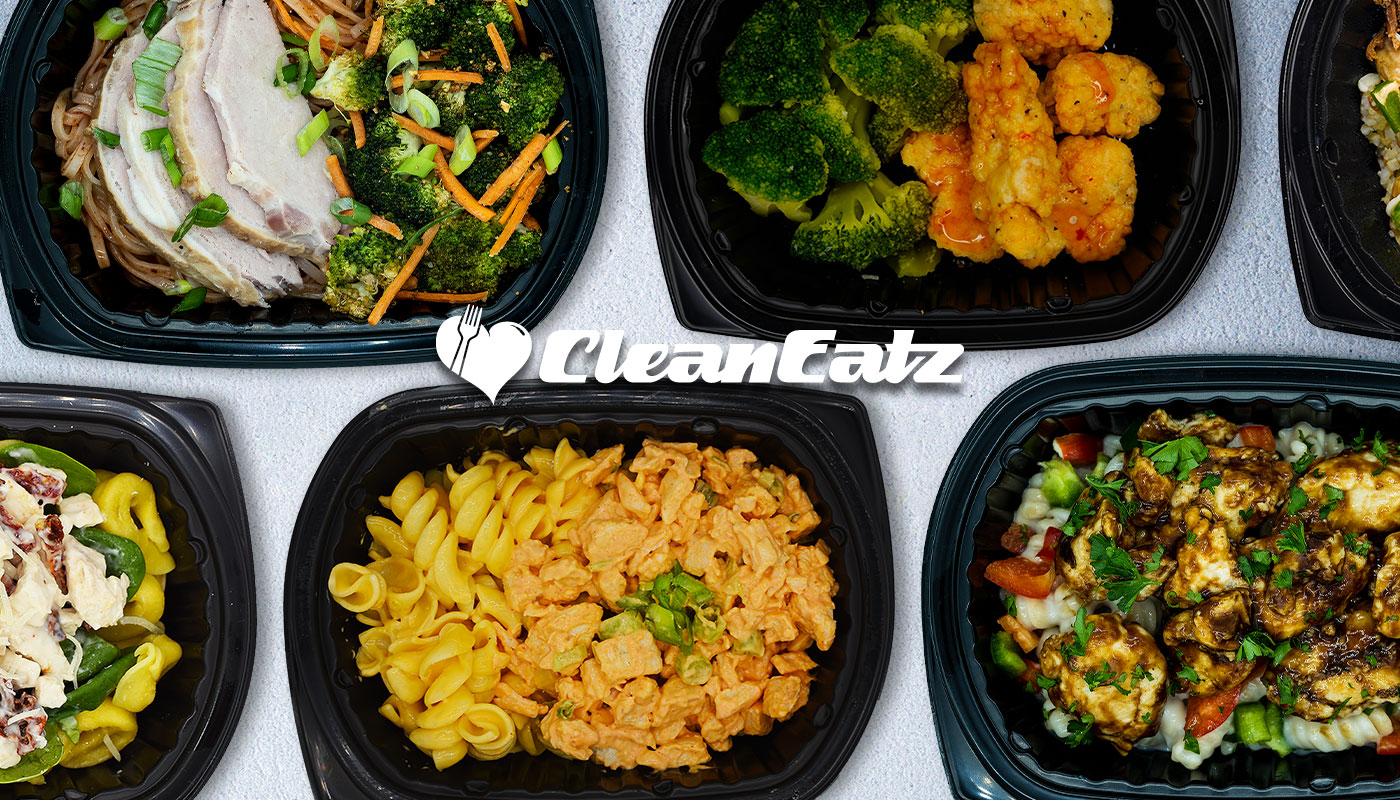
Need ideas? Here are low calorie meals with full macros from our Grab 'N' Go cooler. All seven land between 235 and 396 calories with 26 to 34 grams of protein.
Piling protein on top of everything you already eat. Make it a swap instead. Let the chicken or beans take up room on the plate that used to go to extra bread, chips or a second scoop of rice.
3Let pre-portioned meals do the counting
A pre-portioned meal has the math done before you open the lid. Someone else set the portion, and the calories and macros are printed on the label. You heat it and eat it.
There's research behind this. In an 8-week trial, 60 women were given the same calorie plan. Half ate two portion-controlled frozen entrees a day, plus other foods. The other half picked all their own food. The entree group lost about 12 pounds, versus about 8 for the self-selected group. A matching trial in men found the same pattern.
The calorie plan was identical. The packaged meals just made the portions easier to get right. That's the whole point of weight loss meal prep, whether you cook on Sunday or let someone else do it.
Want a meal plan for weight loss without the cooking? That's what we built Clean Eatz meal plans to do. Every meal is portioned for protein, carbs and fats, with the macros on the label. The menu changes every week. Order online by Sunday and pick it up at your local cafe. See how weekly pickup works.
Pricing drops as you add meals: 5 meals are $8.89 a meal, 10 are $7.99, 15 are $7.69 and 21 are $7.19. Many of the weekly options are low calorie meals, and the label tells you exactly where each one lands.
The Shred bundle for getting lean goes a step further. You get 5 low-carb versions of that week's meals at about 25 grams of carbs each. Protein stays high, and vegetables replace the carbs that come out. Bundle prices vary by cafe.
Freeze meals by Thursday and they keep for six months. You can heat them straight from frozen.
Ready meals won't do the work for you. They just take portion size off your list of decisions.
Eating the meal, then grazing for an hour after. If one meal isn't enough, plan the add-on before you start, like a piece of fruit, a side salad or a cup of Greek yogurt.
4Slow down with mindful eating
Mindful eating means paying attention while you eat, so you notice when you've had enough. Put the phone down, sit at a table and actually taste the food.
- Eat at a table, not at your desk or in the car
- Turn off the TV and put your phone in another room
- Set your fork down between bites
- Stop when you feel about 80% full
- Eat at about the same times each day, so you don't show up starving
Why it works: in a small University of Rhode Island study, 30 young, healthy-weight women ate the same meal once quickly and once slowly. When they ate slowly, they ate about 67 fewer calories and felt fuller at the end. A review of 24 studies found that eating while distracted led people to eat more at that meal, and even more later on.
Keep your expectations honest. Harvard's Nutrition Source says research hasn't consistently shown that mindful eating alone leads to weight loss. It works best paired with a plan, like the plate method or ready meals.
Intuitive eating is a close cousin. Its core rules are to eat when you're hungry, stop when you're full and drop food rules unless you need them for medical reasons. A review of 26 studies found intuitive eaters tend to have a lower BMI and better mental health, mostly in surveys. In trials it helped people hold their weight steady, but maybe not lose it.
Saving mindful eating for dinner. The mindless calories usually show up at your desk and in front of the TV, so start there.
5Track progress without a food log
Skip the food log and track two numbers instead: your weight and your waist. Both take under a minute.
Weigh yourself on the same scale at the same time of day, like first thing in the morning. Once a week works. Daily works too, if you watch the weekly trend and not one morning. A review of 17 studies found regular self-weighing was linked to more weight loss. It wasn't linked to depression or anxiety.
Measure your waist once a month. The NIH says to stand, place the tape just above your hipbones and measure right after you breathe out. A waist over 35 inches for women or 40 inches for men raises the risk of heart disease and type 2 diabetes.
Expect a steady pace. The CDC says people who lose about 1 to 2 pounds a week are more likely to keep it off. Even 5% of your weight can help your blood pressure, cholesterol and blood sugar. For a 200-pound person, that's 10 pounds.
Other signs count too: how your jeans fit, your energy at 3 p.m. and how you sleep. For more ideas, grab our Clean Eatz weight loss tips.
Talk with your doctor or a registered dietitian if you're losing weight fast without trying, or if tracking starts to make you anxious.